Country
 Philippines



The Spiritual Need in the Philippines
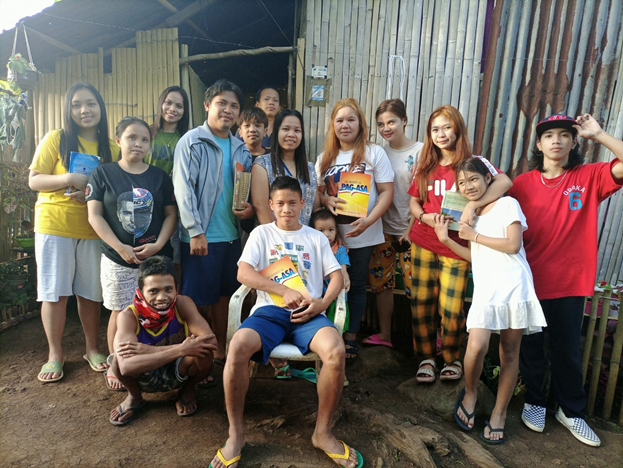
The Philippines, with a population of more than 106 million people across its 7,500 islands, is a deeply religious country. Heavily influenced by the West, the Philippines is the fifth-largest English-speaking country, and Roman Catholicism is the predominant religion with about 80% of Filipinos identifying as such. Though about five percent of the population are Muslim, they are very active, and Islam is growing. Only 13% of people identify as evangelical Christians. There is great need for evangelism, church strengthening, leadership development, and cross-cultural missions training in the Philippines.
For maximum effectiveness, our teams are working to improve partnerships with Filipino church leaders so that together we can continue training and mentoring Christian workers within the Philippines and also for cross-cultural ministry in other countries.
Church Planting Missions In Philippines
Our missionaries first arrived in the Philippines in 1927, and through partnerships with Filipino pastors and church leaders, more than 1,500 churches have been started over the last eight decades. In that time, Filipino believers have also organized their own local and national organizations, established many Christian schools, and started their own mission board—the Philippines Association of Baptists for World Evangelism (PABWE).
Established in 1957, PABWE strategically sends missionaries to nearby unreached Southeast Asian countries. ABWE missionaries help the Filipino-led agency equip and train Filipinos for cross-cultural ministry.
We have also helped establish two training schools to prepare Filipinos for church leadership—the Doane Baptist Bible Seminary in Iloilo City, and the Baptist Bible Seminary and Institute near Manila. These schools are now run by Filipino leadership, but our long-term and short-term missionaries assist with teaching. We also work in cooperation with the Association of Fundamental Baptist Churches in the Philippines.
Medicine has also been an important tool for evangelism in resistant and remote areas. Medical outreach began on the island of Mindanao, and proved so effective that we established medical ministries on the islands of Leyte, Palawan, and Panay. Each location has led to many churches being planted and many lives being saved. We are also working to foster creative evangelism and church planting, particularly in the challenging area of the predominantly-Muslim southern region of Mindanao.

While ABWE celebrates its rich history in the Philippines, the future has promise to be even better. Potential ministry opportunities include theological education, university campus evangelism, and the need for elementary and high school teachers. The country is ripe for innovation and eager to welcome workers who will help the Filipino people carry the torch of missions forward.
Please join our team as we seek to find new and creative ways to reach the Philippines and the world for Christ.
We'd love to talk with you about how God is leading you.
Opportunities
Agricultural Development
South AsiaServe as a coordinator for developing agricultural programs that help tribal people move from slash-and-burn farming methods to stable hillside gardens and orchards.
Assistant Treasurer
South AsiaOur team is needing an assistant treasurer to work closely with our field team and nationals.
AV Program Coordinator
South AsiaWe are seeking a audio-visual program coordinator to help develop a strategic communication plan for our organization's ministry in South Asia.
Bible Translator
South AsiaHelp bring the gospel to hundreds of thousands who have never heard, as a Bible translator in South Asia.
Business as Missions
South AsiaThere are many opportunities for business people to have an eternal impact in this rapidly developing region.
Projects
Aklan Hospital
With the motto "Spread the Word, Heal the Sick", Aklan Baptist Hospital meets the medical and spiritual needs of the people of Caticlan, Aklan on the island of Panay in the Philippines. The hospital was started by ABWE and is now led and run entirely under national Filipino leadership.…
Baguio Student Center
A ministry of Baguio Baptist Church in Baguio City, Philippines, focused on ministry to college and university students in the city. …
BBSI Manila Work and Scholarship
Since being established in 1930, BBSI-College, by the grace of God, has produced men and women equipped and able to serve God in their respective fields of ministry all over the country and even in the international stage. …
Bethel Baptist Hospital
Bethel Baptist Hospital is a ministry started by ABWE to provide hope and healing to those living in Bukidnon, Philippines. It is now run by Filipino nationals. …
Boracay Grace Bapt-Philippines
Great things are in progress on the mission field through this ministry! Our missionaries will be sharing more project details shortly and look forward to how you might get involved. If you need to get in touch immediately, let us know at info@abwe.org…